A question you often get asked in this job is “what is the craziest thing you’ve seen whilst diving?”. For many years, my answer was one that always surprised people. It wasn’t any of the almost unbelievable things I’ve been lucky enough to see and film - it wasn’t diving amongst a dozen sleeping sperm whales, it wasn’t filming predatory Giant Trevallies snatching birds from mid air, and it wasn’t documenting parasitic pearl fish burrowing into a sea cucumber anus(!).
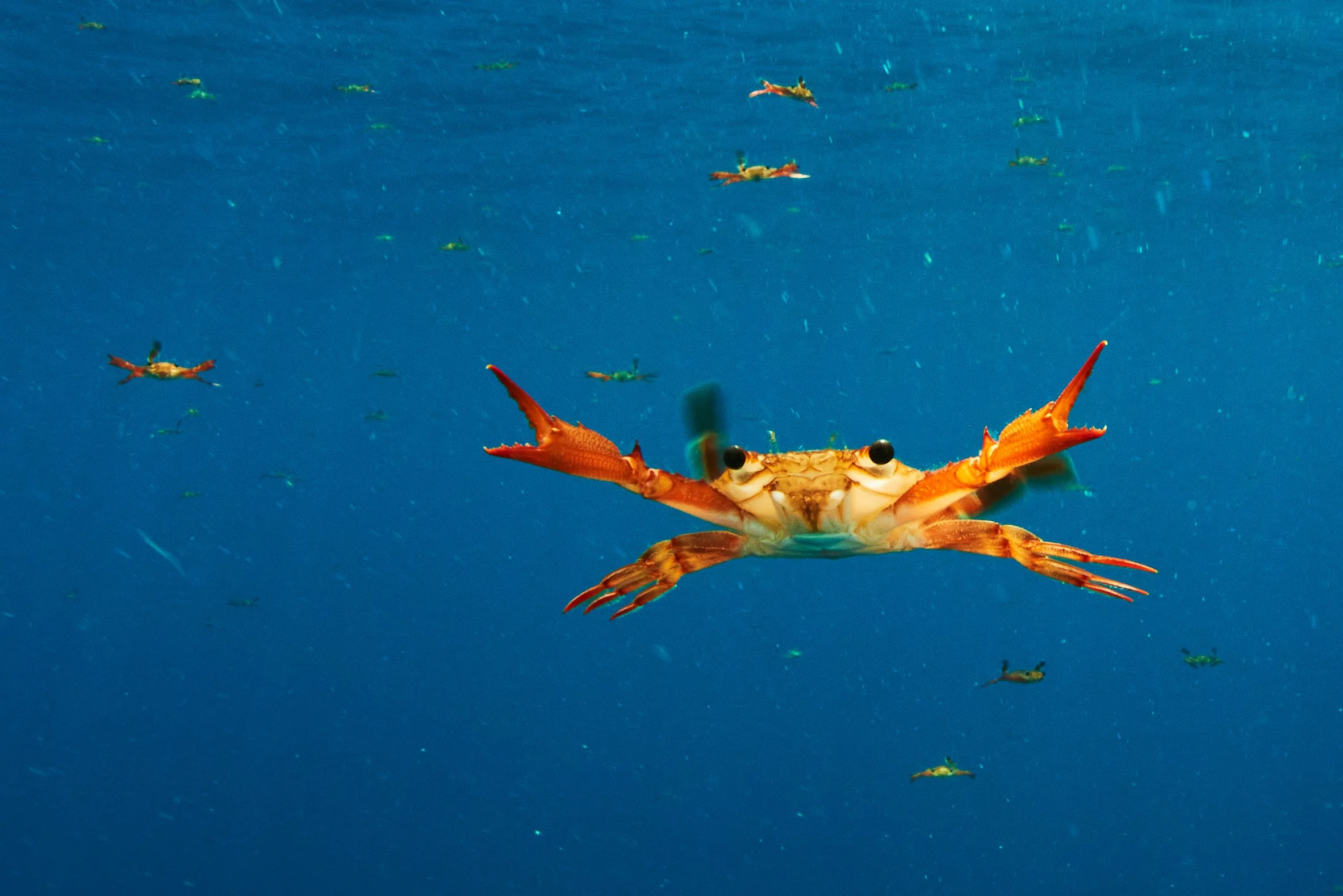
It was seeing an aggregation of thousands of tiny, oceanic crabs filling the water column, over a shallow reef in the Seychelles.
This encounter happened back in 2017, shortly after I had finished working on Blue Planet II full time for almost two years, and having seen a great number of incredible sights around the world’s oceans. I was in the Seychelles assisting my dear friend, and now CEO of the Save Our Seas Foundation, Dr James Lea on one of his regular fieldwork trips.
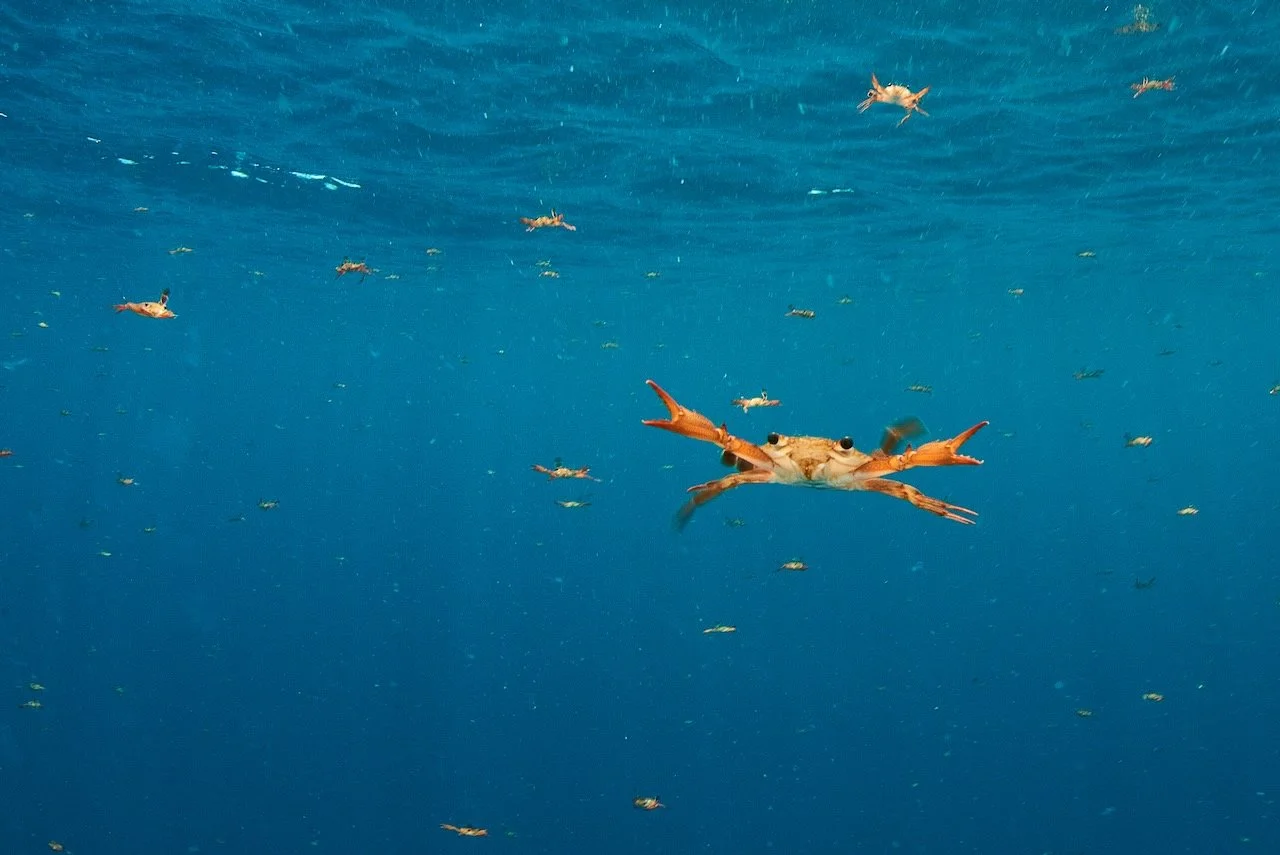
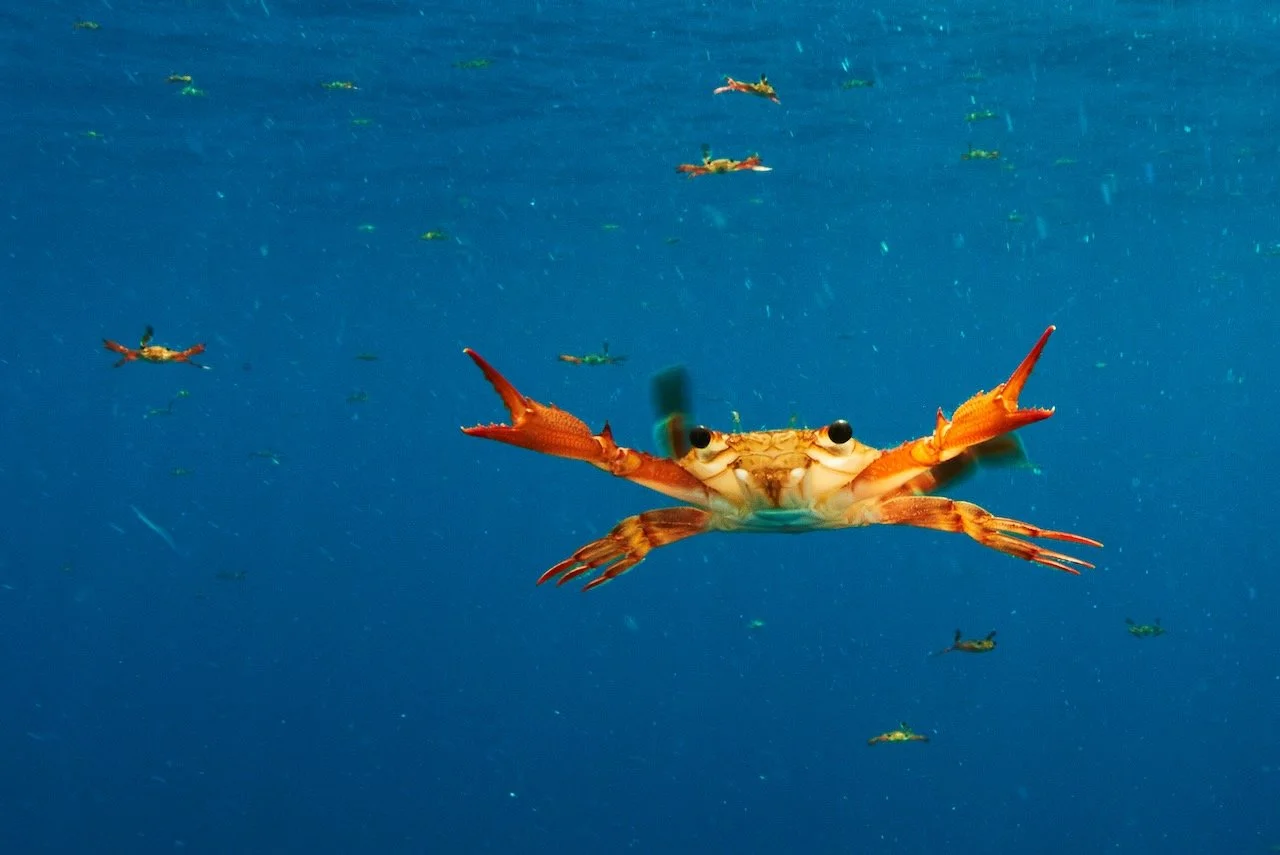
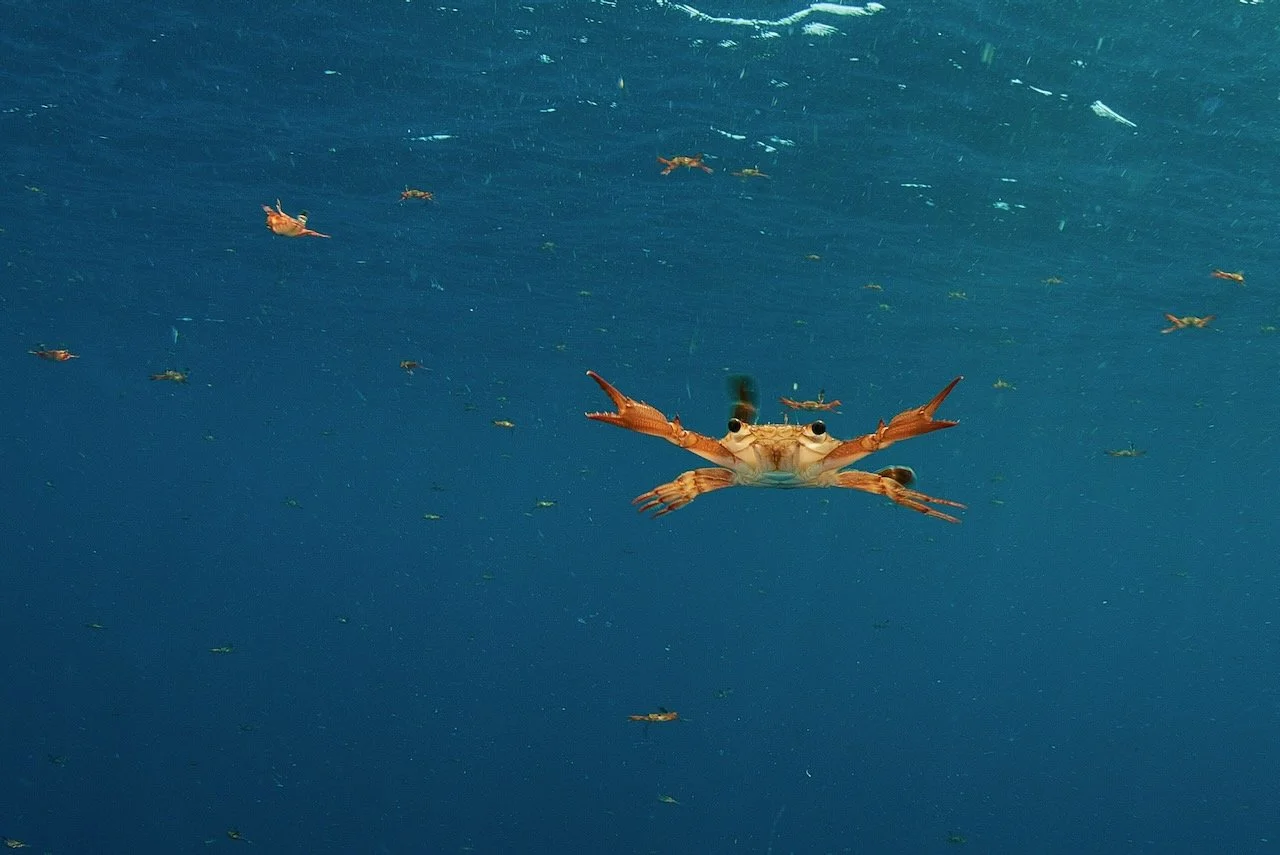
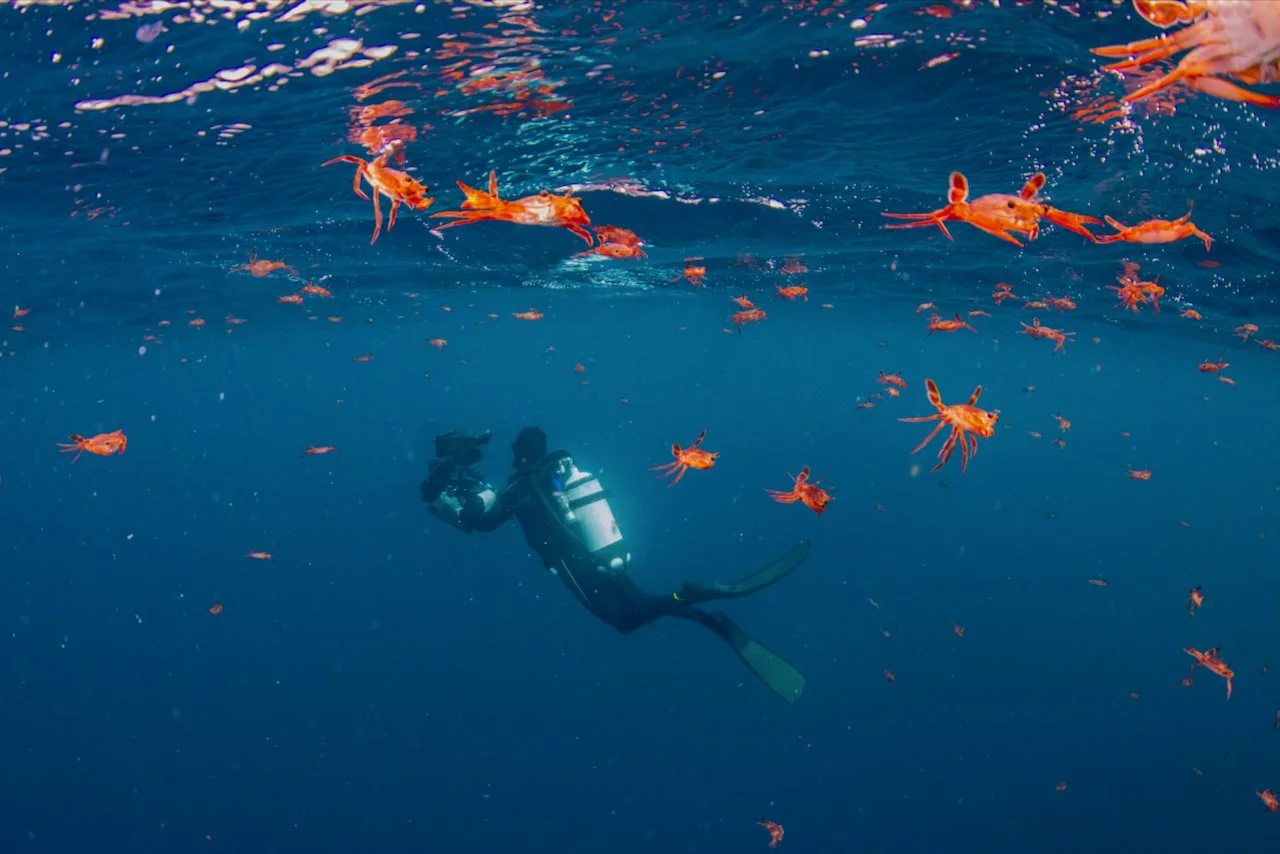
We were diving on a site I had dived dozens of times previously, and knew very well. Imagine my surprise, when I looked over the side of the boat in preparation for a dive, to see the water column full of tiny bright orange crabs, from the surface down to sea floor at 20m.
Thousands, probably tens of thousands of tiny open ocean nomads each no more just a few cm across. I didn’t know what they were (much later I learnt they are Smiths Swimming Crabs) where they had come from, where they were going, or what they were doing there.
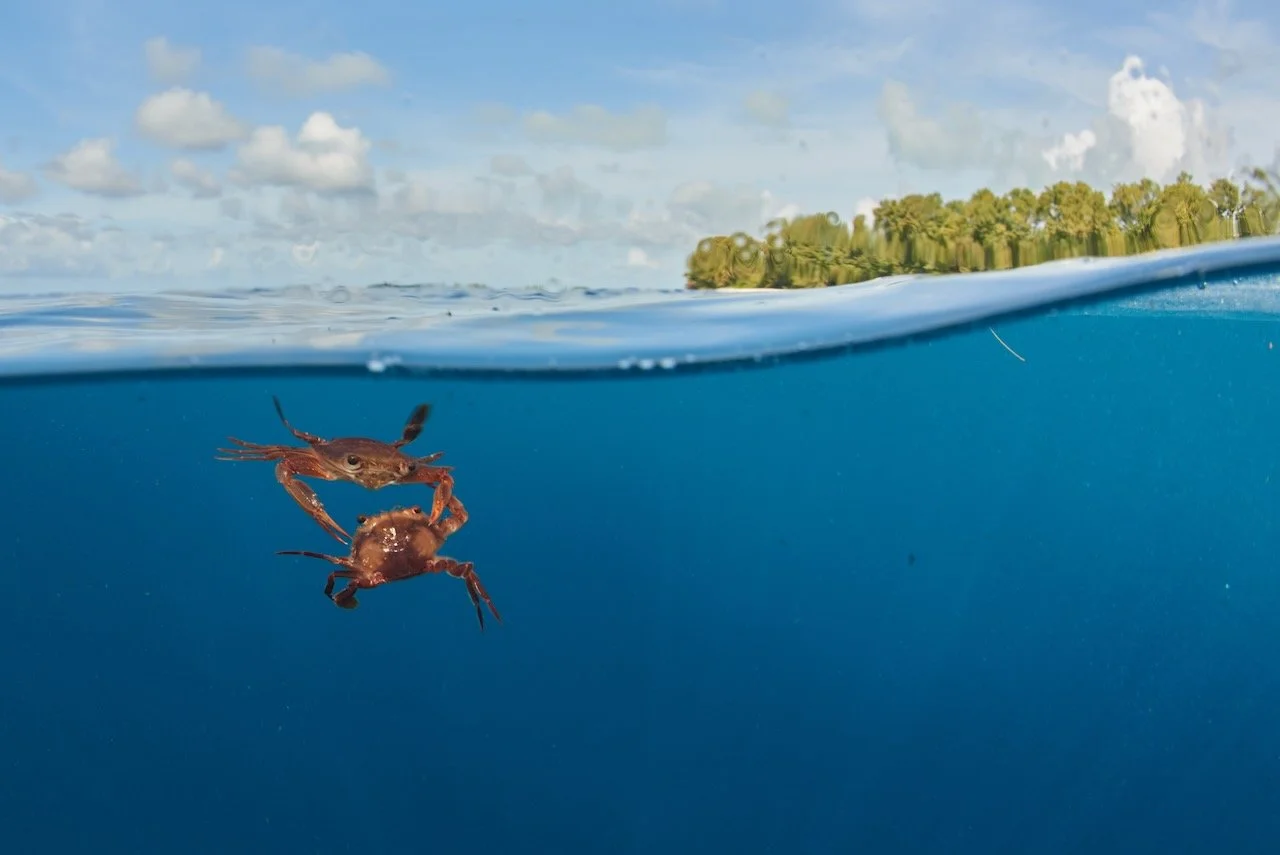
Each crab would maintain a minimum safe distance from its neighbours to the left and right, as well as above and below - jealously defending its open ocean territory from carbon copies of themselves. If any two strayed too close together, they would become locked in a cannibalistic battle - a battle that two crabs enter but only one crab leaves. The crabs would investigate any piece of flotsam and jetsam in water column - from a floating beer bottle to a blade of seagrass, but most of all, me - curiously nibbling at pieces of wetsuit and diving kit.
These encounters repeated over the following days - sometimes with only a few crabs, sometimes with the densities growing to the extent where crabs would be pushed toward the reef and be picked off by reef fish. From talking to local fishermen, it would seem that the crabs form an important part of the diet of many reef fish at this time of year. The only frustrating thing about this encounter was that I only had a simple stills camera with me - that I used to shoot the below images - I didn’t have a proper video camera to use to record the spectacle.
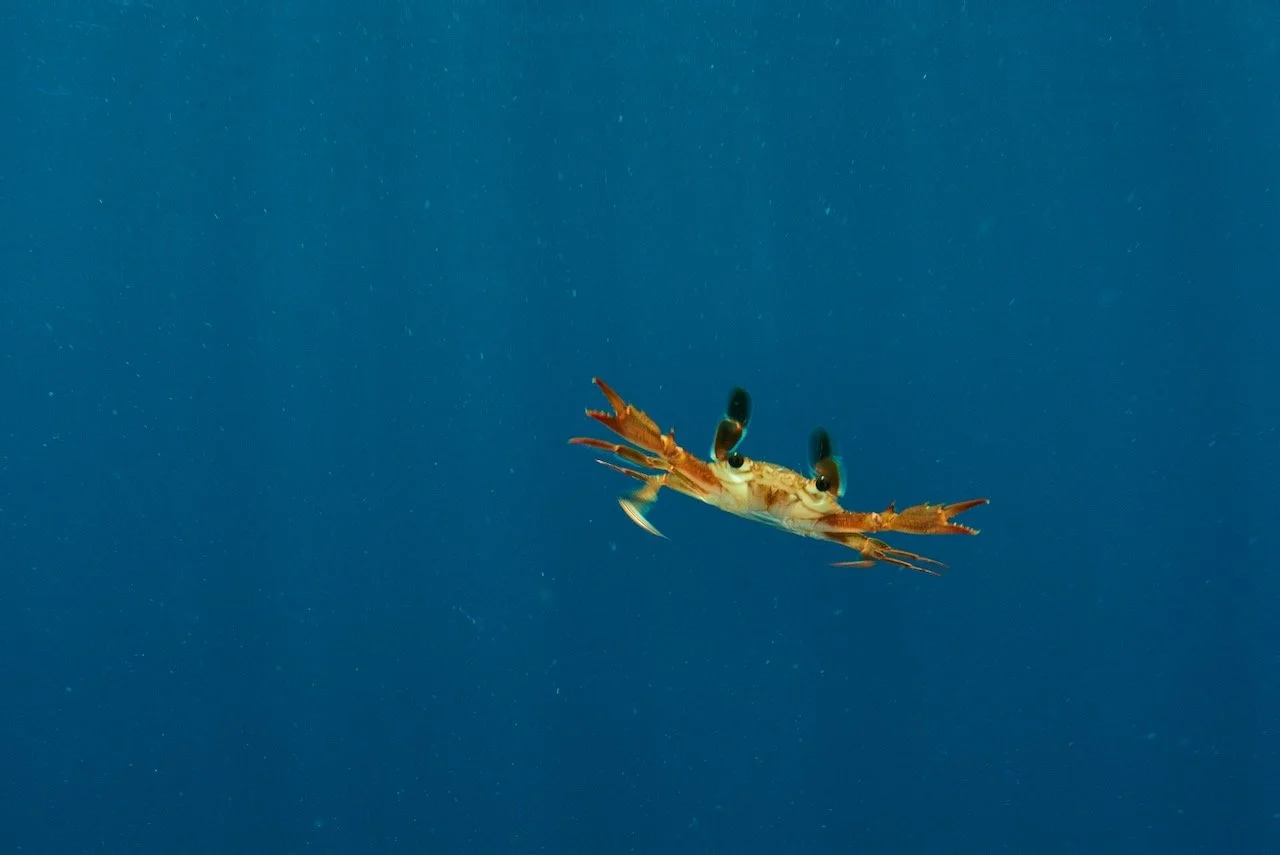
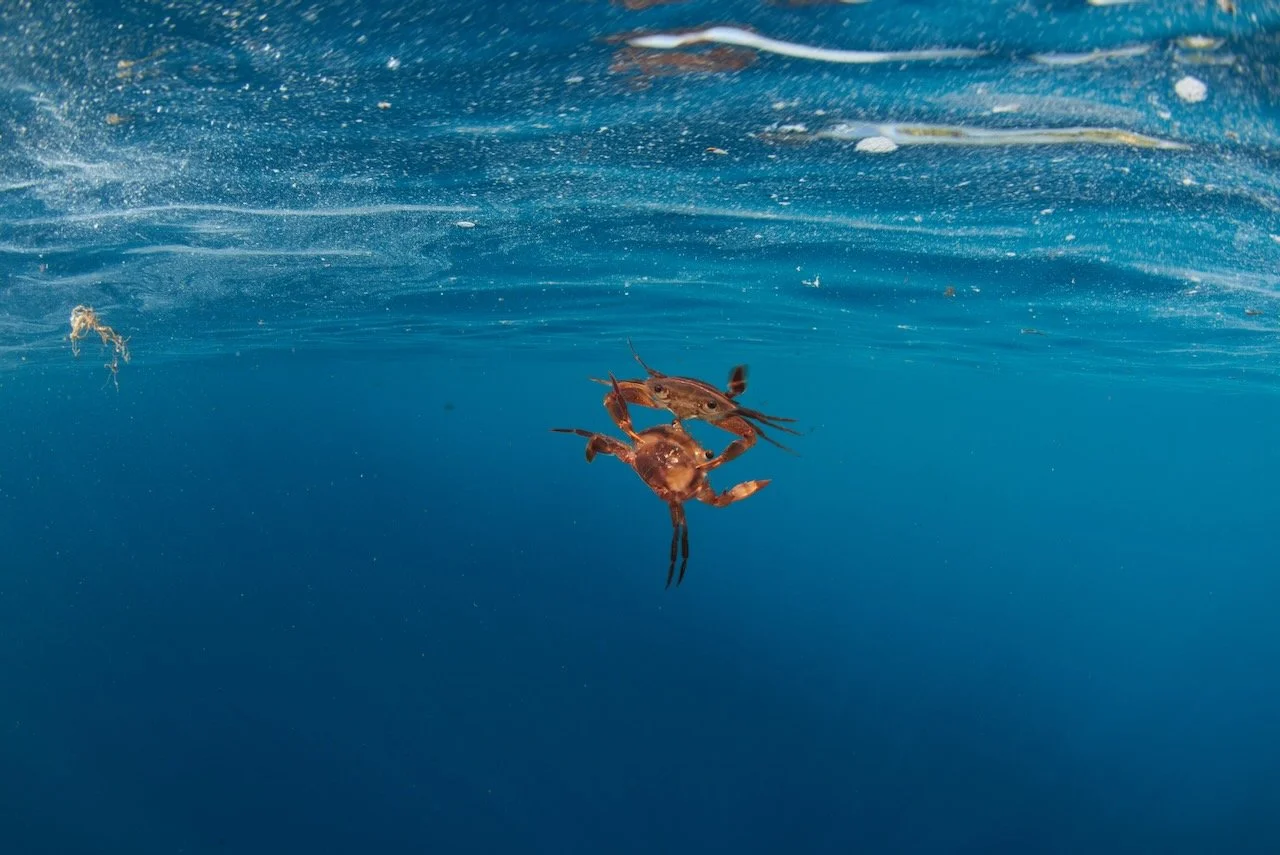
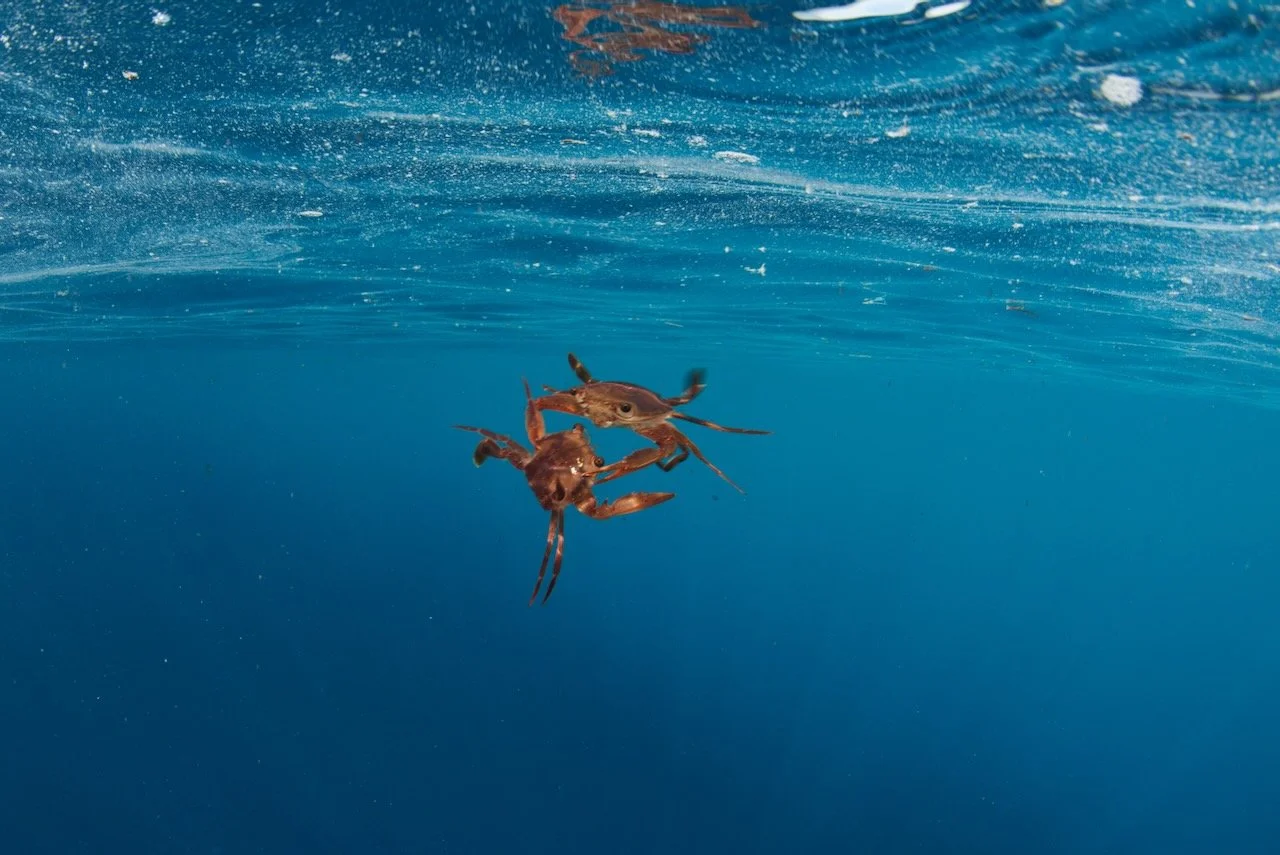
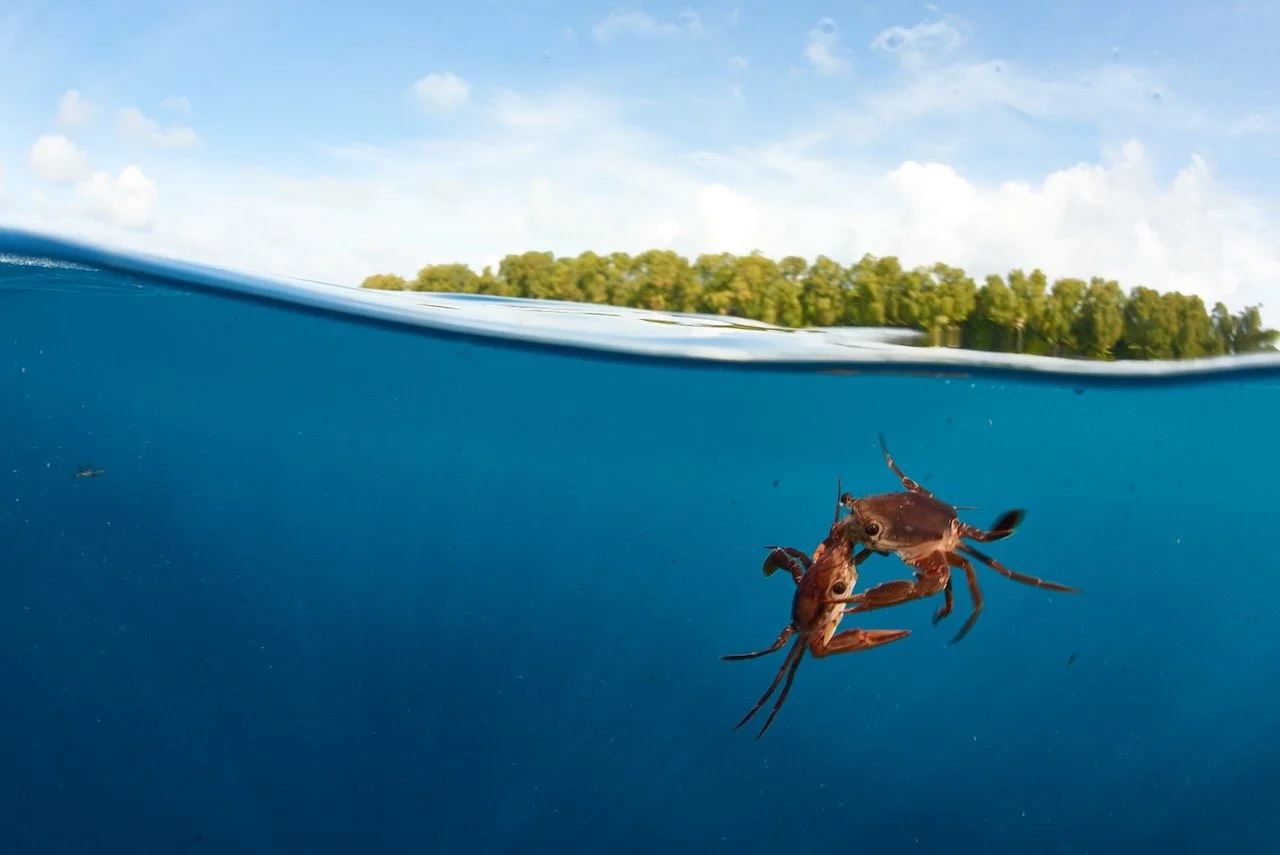
To quote the website www.seaunseen.com;
“Smith’s Swimming Crab (Charybdis smithii) is a very interesting swimming crab that exhibits swarming behavior. They were first found in False Bay near Cape Town in South Africa in 1838 when a large swarm was discovered. They were only seen swarming again in Cape Town in 1978 some 140 years later. They then reappeared in 1983 and 1993. Swarming in other areas off the East Coast of Africa and Somalia has subsequently been documented as well as the East and West Coasts of India.”
The more l researched Smiths Swimming Crabs, the more intrigued I was. This great ocean mystery was so tantalising to me that it would sometimes keep me awake at night (sad, I know). A story like this is something something of a holy grail in wildlife filmmaking; a great ocean mystery, but one that is perhaps repeatable enough to be able to document in sufficient detail for a BBC wildlife sequence - but only if I were able to get back to the Seychelles, and only if luck were on my side.
Was it a complete fluke that we had been in the right place at the right time to see this aggregation - something that very few people had ever seen - or was there a pattern to this behaviour? Would I be able to return to document this story, or would I never see another Smiths Swimming Crab in my life?!… Even if you threw masses of resources at trying to film this elusive spectacle, it would get you nowhere - you couldn’t just go out and find these crabs - there was next to no information about them. They were elusive and ethereal, but I knew they had the potential to also be charismatic and characterful - I had already written their story in my head, I just needed to find them again and film them.
For years this initial sighting haunted me. I wanted so badly to go and experience it again, but this time armed with a proper camera to be able to document it and ultimately share it with the world. I had seen something few people had, and something which was so difficult to explain. I will admit I became slightly obsessed - I must still be one of the only people in the world with a Google Alert for ‘Smith Swimming Crabs’. I reached out to scientists, marine guides and fishermen I know all over the Indian Ocean to see if anyone had experienced anything similar, to try and get an idea if there were any level of predictability to this event. Very few other sightings or reports presented themselves, and none indicating much in the way of a pattern, until I saw one Instagram post by resident Seychellois Save Our Seas scientist - Dillys Pouponeau, who had an experience like mine, at a very similar time of year.
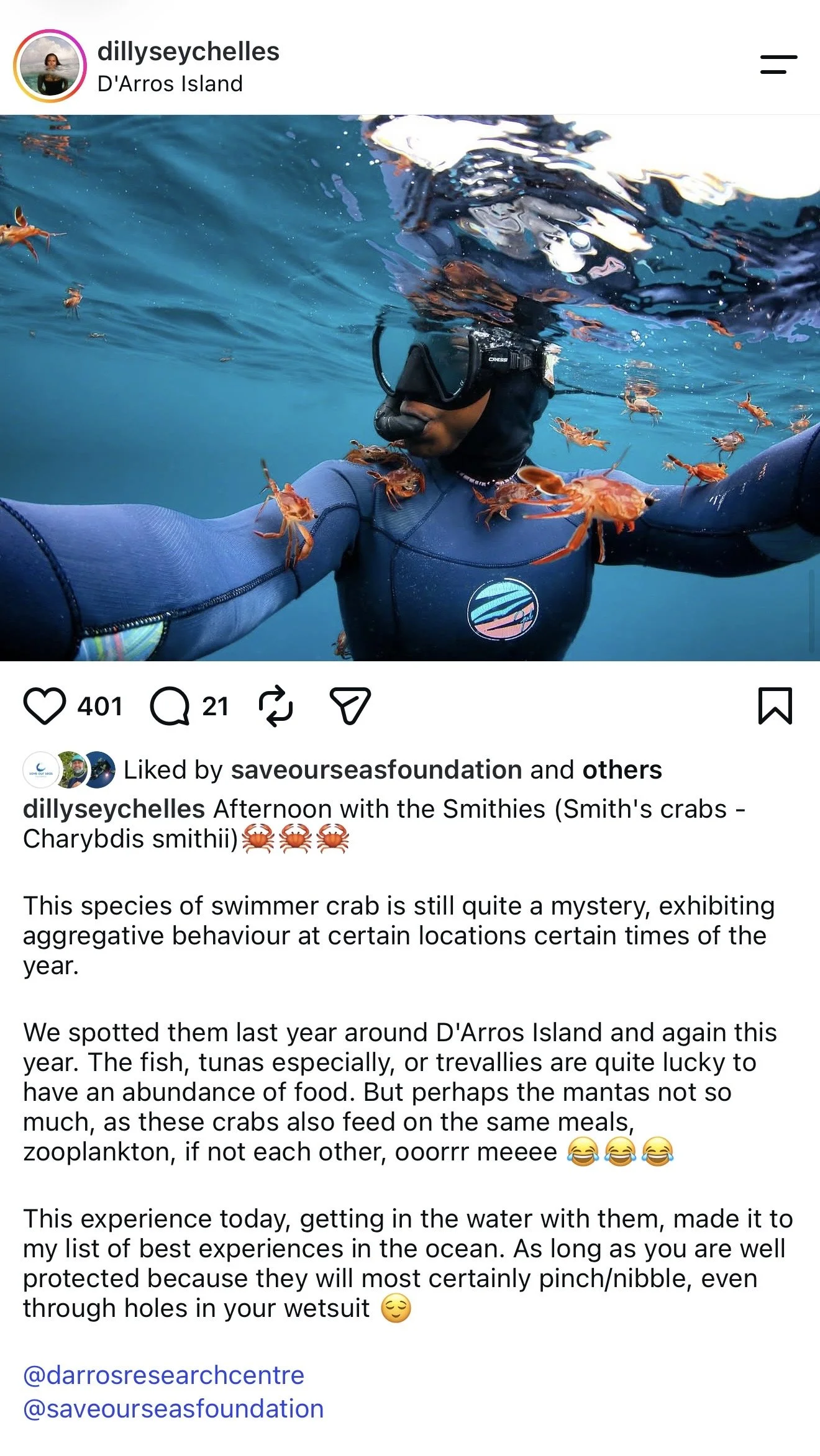
Cut to six years after my inital encounter, and I found myself with a gap between shooting assignments and I decided to take a risk, and to fly back out to the Seychelles to try my luck and see if I could slay this crabby demon once and for all 🦀
To decide my timing, I looked back at what few sightings there had been, and if there was any correlation with tide & moon phase, weather patterns or other environmental factors - and then trying to make this dovetail with when there was availability for me on the island.
As luck would have it, my timing worked out. On the first diving day I found a few crabs, and as the days went on and we got closer to full moon and bigger tides, the numbers and densities of crabs grew and grew, back to similar numbers that I had seen on that first encounter many years earlier. It wasn’t a fluke; this was a regular event.
I was able to document the complete story of the Smiths Swimming Crabs that I had been repeating in my head for years. I still can’t quite believe I got as lucky as I did.
Thanks to a great many people for making this happen - Dr Chris Clarke and Dr James Lea for hosting me back on the island as well as the different teams from Danah Divers and the Save Our Seas Foundation for their logistical support on location.
Many thanks also to BBC Producer Natasha Fellows for including this story in her ‘Open Ocean’ episode of Blue Planet III, and congratulations for achieving what you did - the open ocean is one of the most challenging environments to work in, and altough at the time of writing I have not seen the show, I already know its going to be amazing.
Encounters with Smiths Swimming Crabs © SOSF / Dillys Pouponeau & Henriette Grimmel
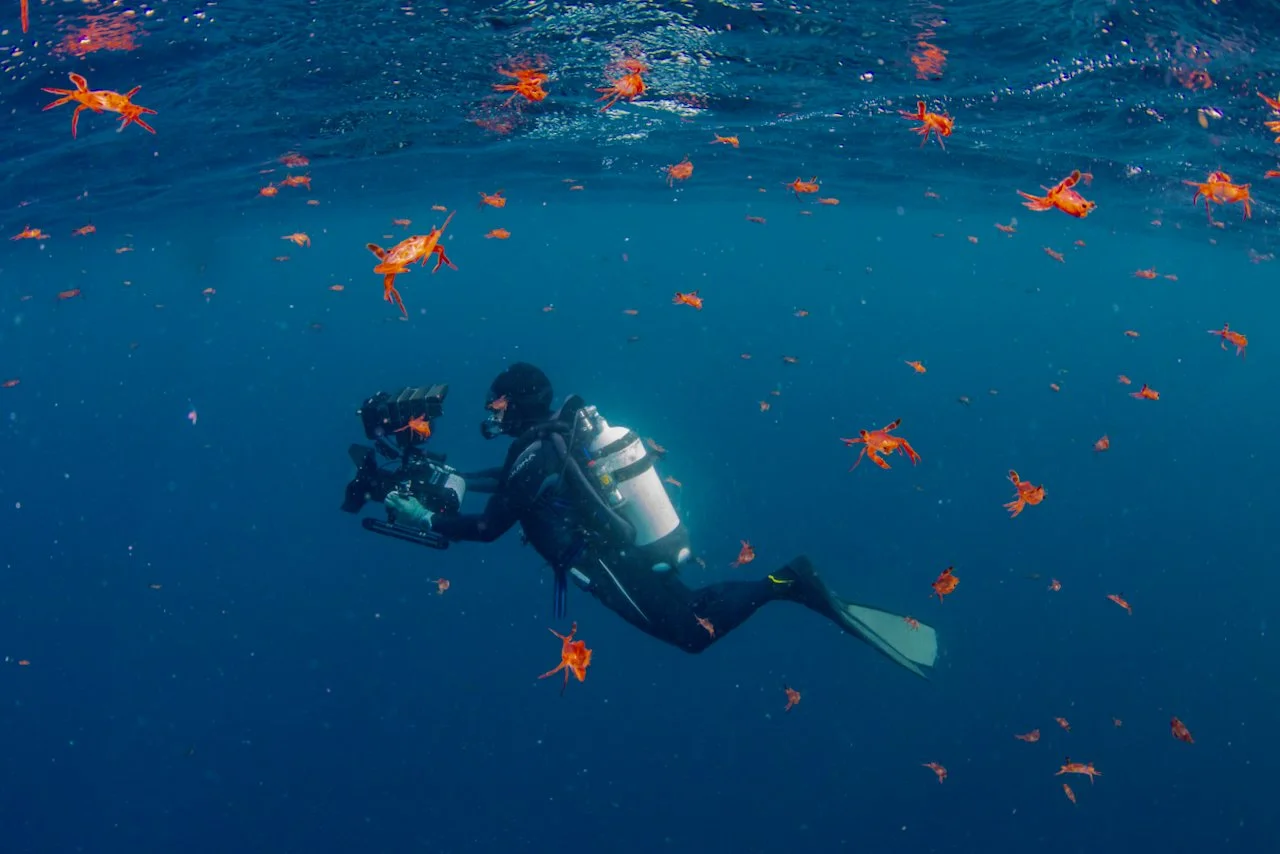
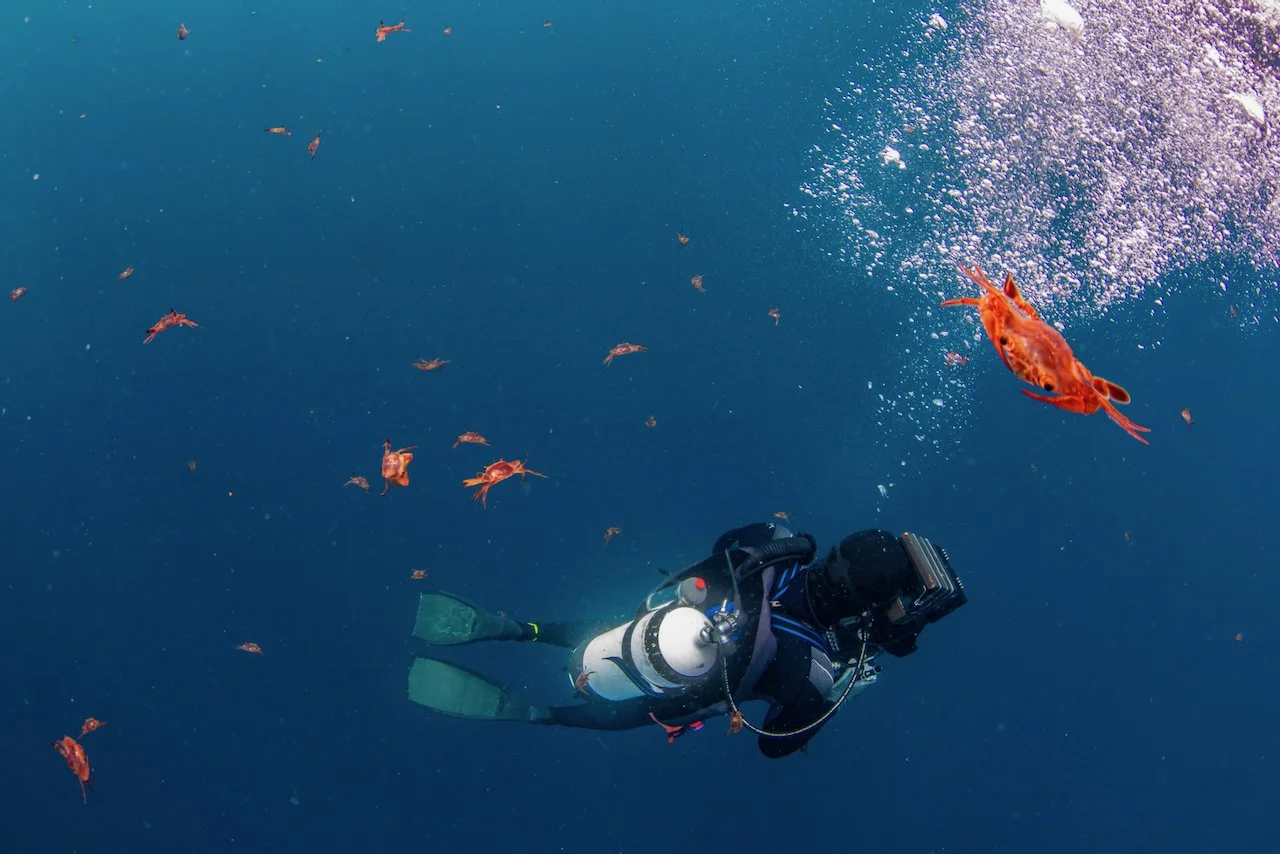
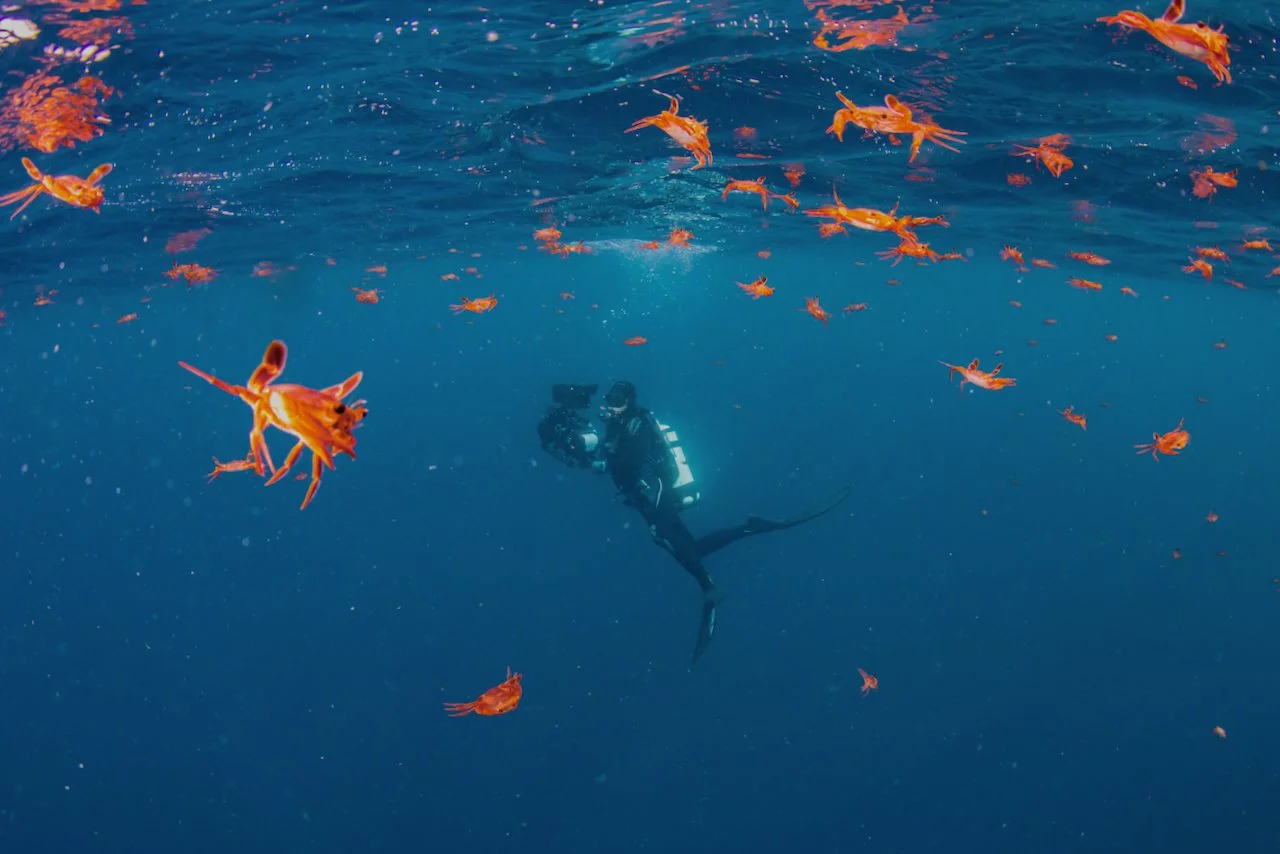
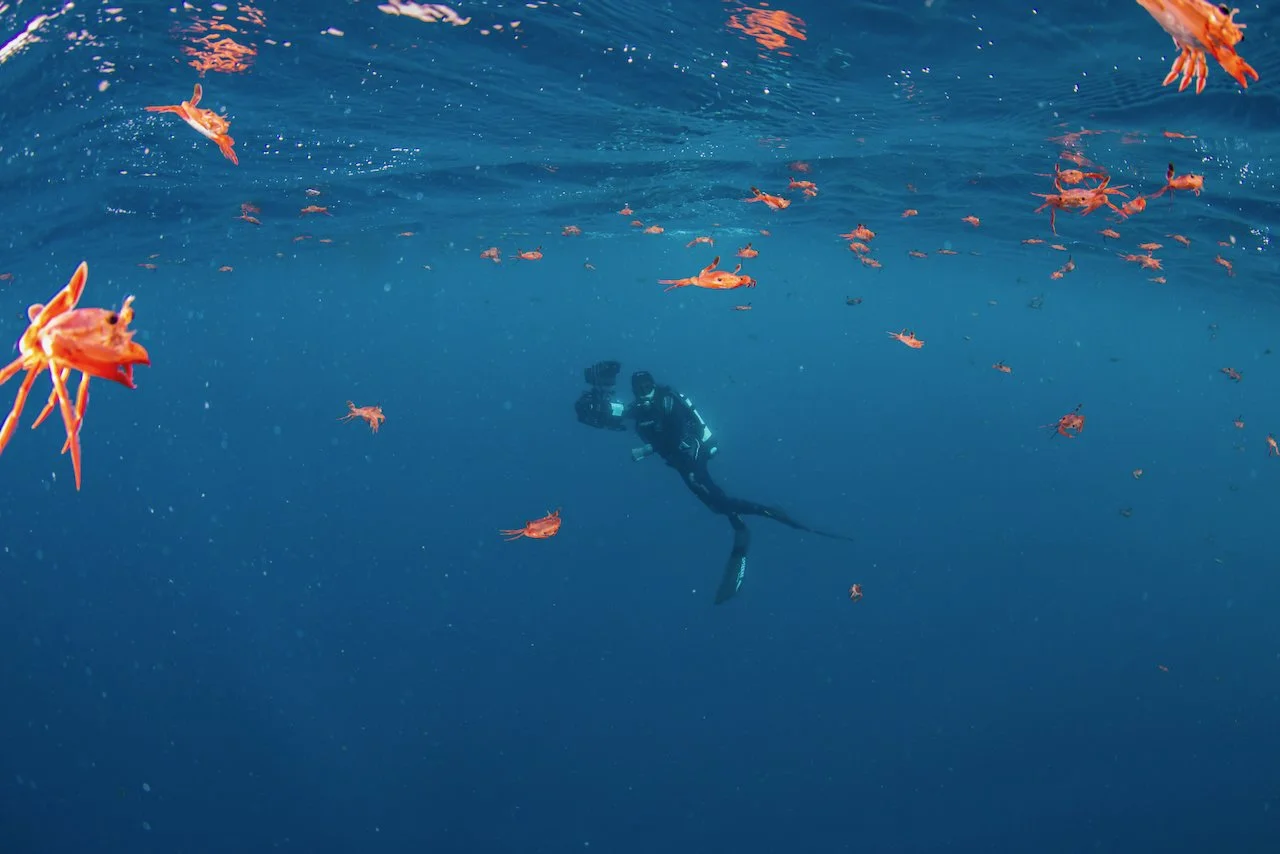
© SOSF / Dillys Pouponeau & Henriette Grimmel